AI-Native Pipeline · 2026

Scout

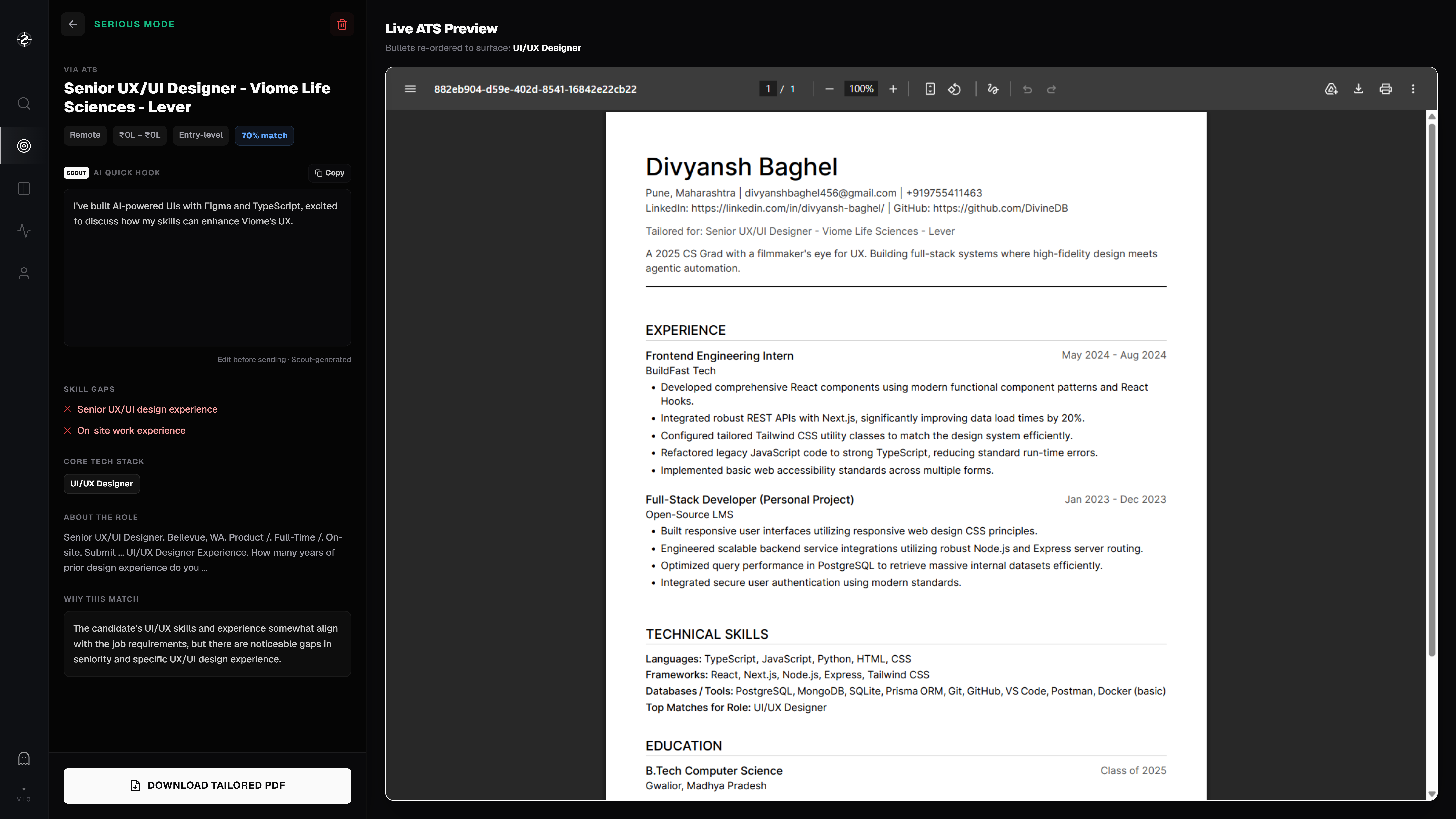
A zero-noise job intelligence platform. Autonomous. AI-powered. Built to eliminate the cognitive tax of job hunting.

RoleDesign Engineer
TimelineApr 2026 → Present
LanguageTypeScript
Stars★ 1
Next.js 16SupabaseGroq LLMsTypeScriptFramer Motion
Summary

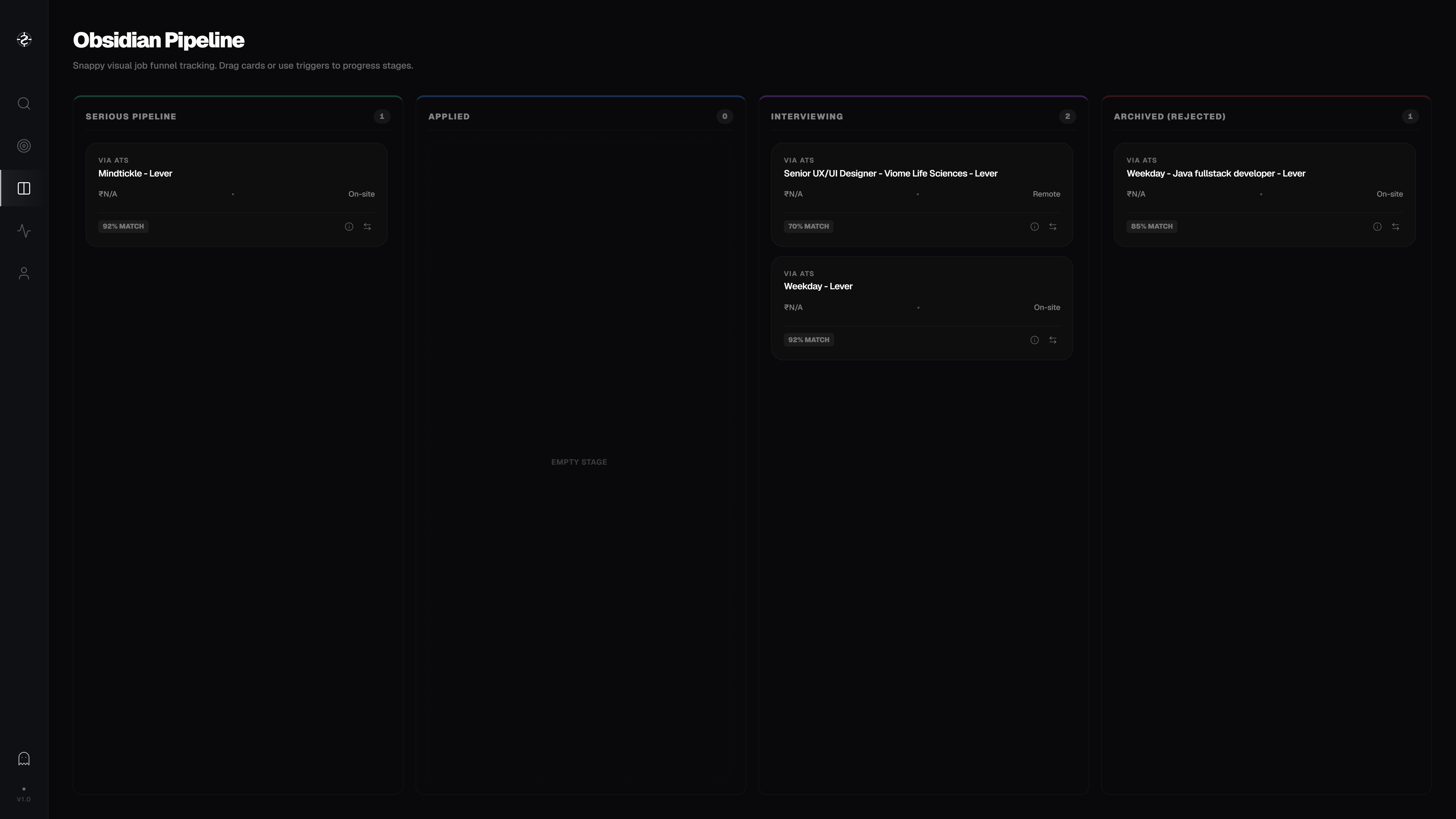
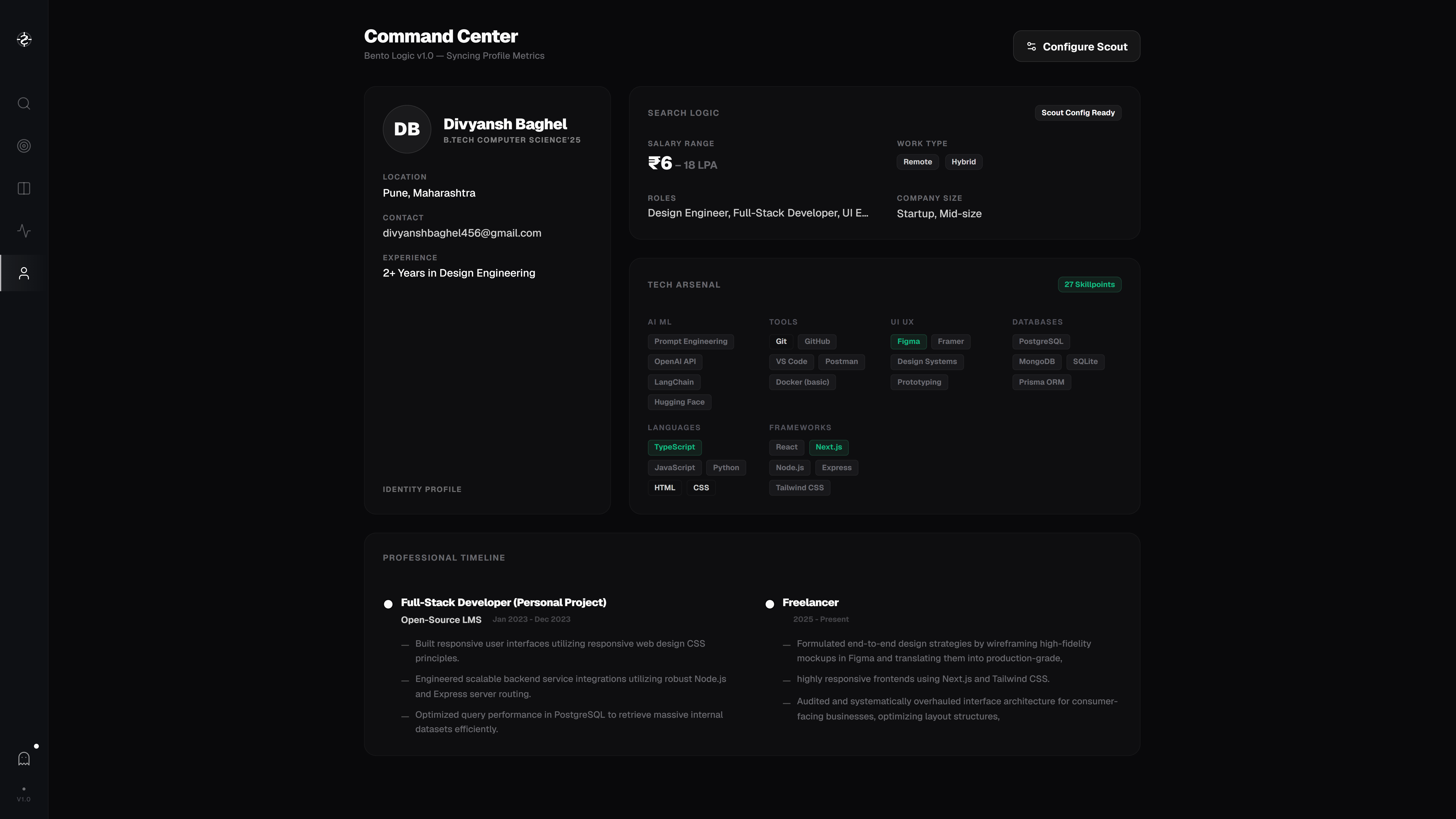
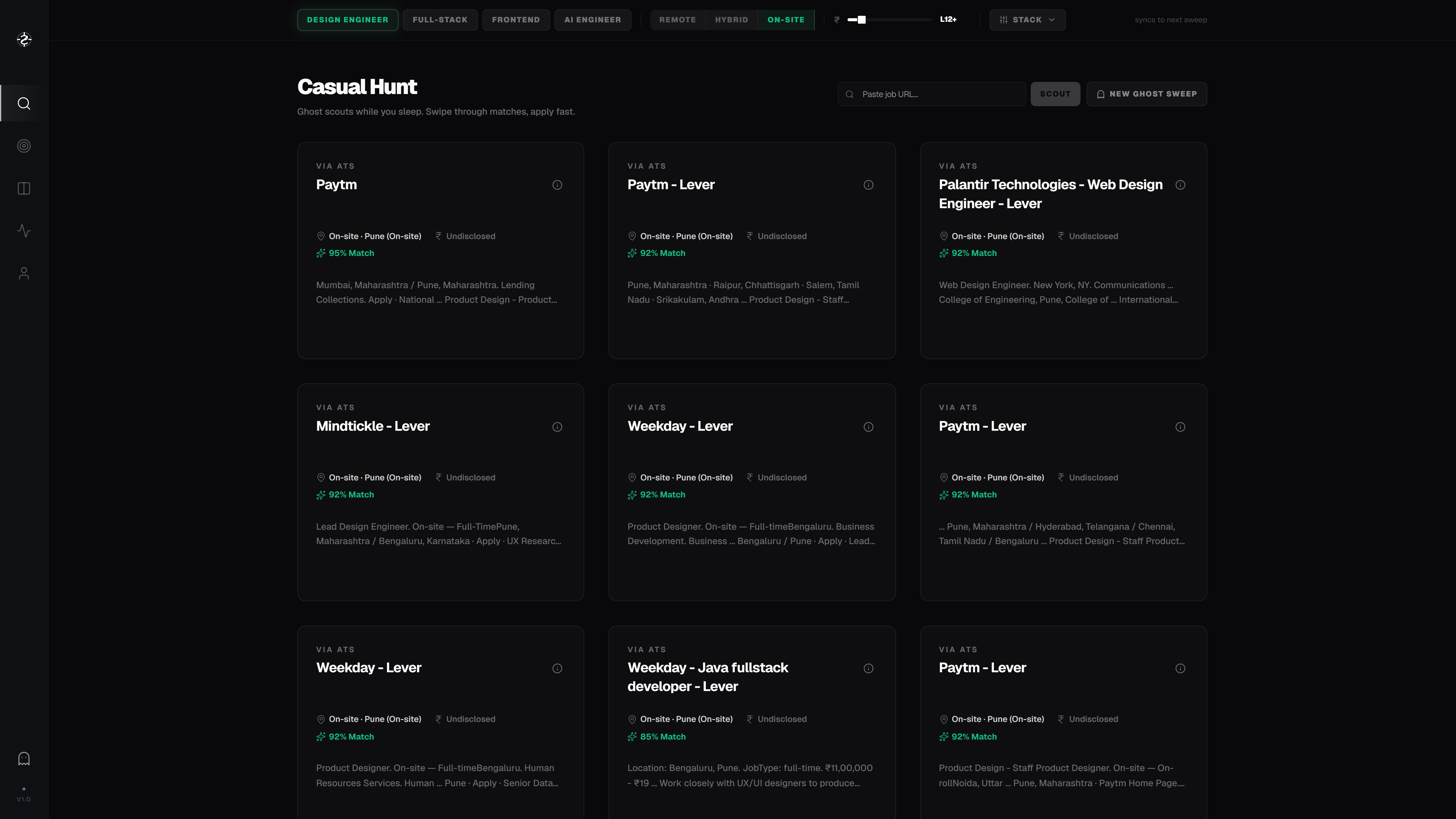
Scout is an intelligent job search interface custom-built to distill chaotic, raw employment listings into clean, zero-noise action paths.

UX Challenge: Cognitive Fatigue

Standard job boards overload job hunters with repetitive postings, bloated layouts, and buried metadata. Sifting through hundreds of listings causes visual fatigue. The challenge was structuring dense text so that relevance scores, tech alignments, and application paths are scanned in under 250ms.

01. Conceptual Surface Architecture

Scout is built around the Obsidian Mint design system. Rather than using harsh borders and high-opacity dividing lines, Scout separates modules using a gradual HSL-based surface ramp stacked in a strict conceptual sequence:

  • Base Frame & Glassy Overlay: An Obsidian base frame provides a dark canvas to reduce eye strain, while a glassy overlay acts as a container for secondary search filter modules.
  • Muted Panels & Overlay Cards: Slightly lighter elevated containers holding individual job listings to visually separate cards.
  • Emerald Signature Accent: High relevance matches, active markers, and primary action CTAs utilize an Emerald Mint highlight, catching focus within milliseconds.
Workflow Visual: Isometric Elevation Stack

02. Two-Stage Structured AI Filter

Extracting salary, skills, and relevance matches using heavy 70B parameter LLMs directly on raw, noisy scraped web targets is slow and financially unsustainable. Scout utilizes a two-tier extraction pipeline:

  • Lightweight Classifier: A fast classifier (llama-3.1-8b) runs instant pass/fail evaluations on incoming postings.
  • Deep Distiller: Only matches that pass are dispatched to a heavy LLM (llama-3.3-70b) to generate clean JSON schemas and resume-tailoring drafts, reducing API overhead costs by 75%.
Workflow Diagram: Pipeline Architecture

Pipeline Architecture

01
Ghost Sweep EngineCRON → Google Jobs · RemoteOK · ATS
02
Rapid Classifierllama-3.1-8b · filter bad matches
03
Deep Distillerllama-3.3-70b · JSON hooks + resume morph
04
Supabase RealtimeLive staging → Optimistic UI push

03. The Ghost Sweep Engine

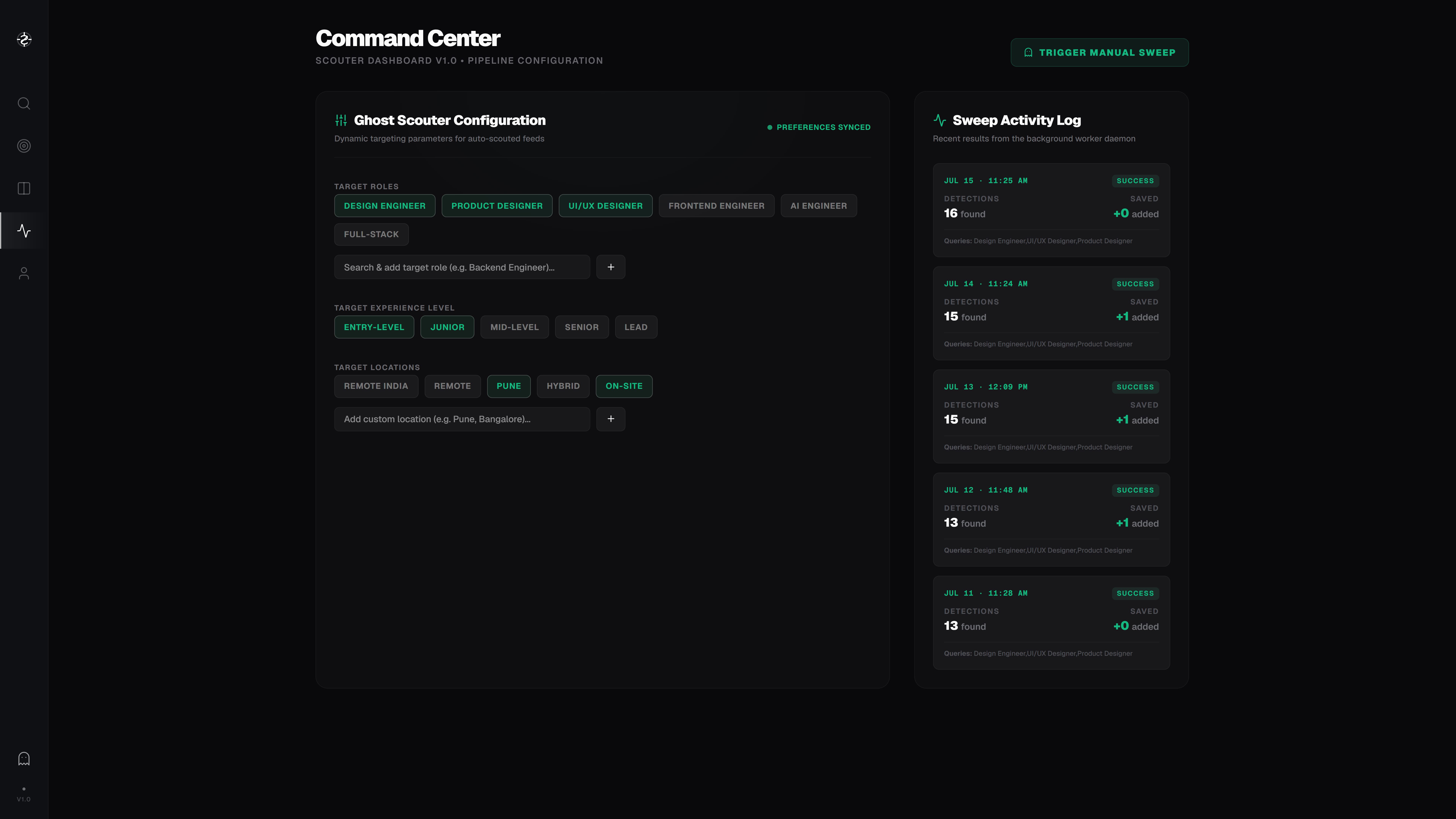
To aggregate jobs autonomously, a background worker runs scraping scripts across multiple job source endpoints.

  • Cryptographic Deduplication: Scraped description text passes through local hash comparison filters to drop duplicate listings before dispatching LLM queries.
  • Staging & Realtime Broadcast: Live processing states sync over Supabase Realtime pipelines, rendering optimistic draft states and preventing layout jumps.
Workflow Visual: Scraped Score Feeds
92
87
74
80
75
70
65
Scout Score Metrics

System Specifications Reference

Direct reference specifications detailing theme layout hierarchies, focus ring rules, and transition speeds.

Design Element System Showcase

Obsidian Mint
Elevation Architecture
▲ Overlay Card (Active Info)■ Muted Panel (Secondary Container)▼ Base Canvas (Obsidian Frame)
Semantic Components
Relevance Match
98% Match
Work Arrangement
Hybrid · SF
Interactive StateActive Glow

Conceptual Surface Architecture

Scout operates on the Obsidian Mint design system. Rather than relying on heavy boundaries, it separates modules using a gradual HSL-based surface ramp stacked in a strict conceptual sequence:

  • Base Frame: A deep Obsidian tone that provides a dark, non-reflective canvas to reduce eye strain and ground the page.
  • Glassy Overlay: A translucent layer serving as a container for secondary search tools and filters to create visual depth.
  • Muted Panels & Overlay Cards: Elevated container surfaces hosting individual listings to make cards feel raised.
  • Micro-Borders: Hairline dividers isolating active/hover states without introducing layout clutter.